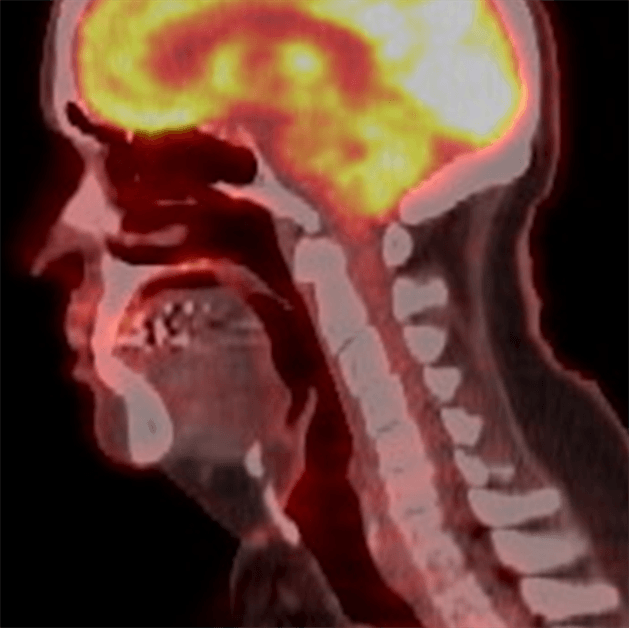
Reporting Head and Neck Cancer
Head and neck cancer is the 8th most common cancer in the UK, with around 12,400 new cases diagnosed per year (2016-2018). Head and neck cancer incidence rates are projected to rise by 3% in the UK between 2023-2025 and 2038-2040 (Cancer Research UK).
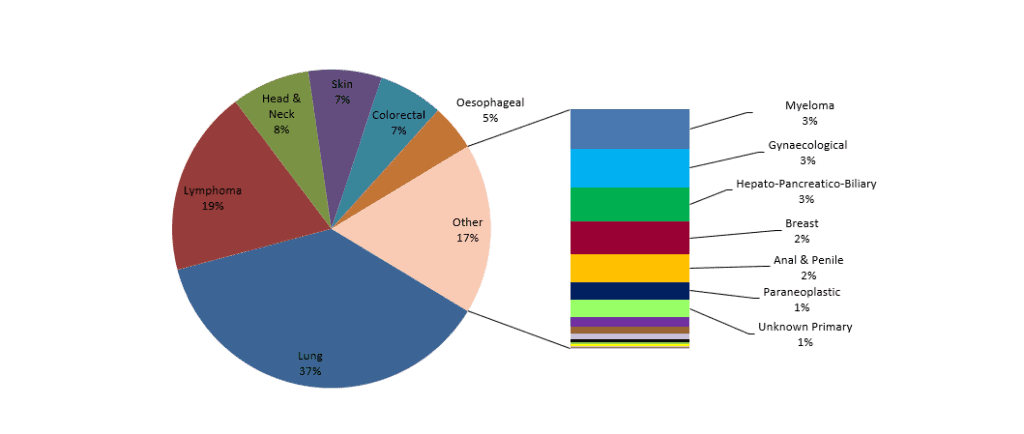
PET-CT Scans Performed 2022-2023
At our institution, head and neck cancer accounts for 8% of all PET-CT scans performed.
The evidence-based indications for use of PET-CT in the UK 2016 list five indications for FDG PET-CT in head and neck cancer:
- Staging in patients where this is clinically difficult
- Staging and restaging in patients with a high risk of disseminated disease or primary sites with a high propensity for disseminated disease
- For identification of primary sites in patients presenting with metastatic SCC in cervical lymph nodes, where no primary site has been identified on other imaging
- In response assessment 3-6 months after chemo-radiotherapy
- To differentiate relapse from treatment effects in suspected tumour recurrence if MRI is uncertain or equivocal
The use of PET-CT in these indications will be studied in detail in this course, which is comprised of three modules, followed by a case-based assessment.
- Tutorial 1: Head and neck anatomy and sites of uptake
- Tutorial 2: The role of PET-CT in head and neck cancer
- Tutorial 3: The role of PET-CT post-treatment
Learning Objectives
- Describe the head and neck anatomy, including the thyroid and salivary glands
- Determine patterns of normal physiological FDG uptake and the benign causes of non-physiological distribution of FDG in the head and neck
- Describe location and staging of common head and neck cancers
- Discuss the use of PET-CT in post-treatment head and neck cancer
Please note: To mark this course as complete on your Learning Dashboard and access your certificate of completion, you must finish all learning modules and submit the course evaluation.
Suitable for radiologists and nuclear medicine physicians who intend to train to report PET-CT, or who otherwise encounter these studies in their practice and wish to increase their confidence, for example in the role of a presenting radiologist at an MDT (Multi-Disciplinary Team).
References:
- Evidence-based indications for the use of PET-CT in the United Kingdom 2022
- Cancer Research UK. Accessed November 2023.
-
Soo Mak
Dr Mak is a diagnostic oncology radiologist with a specialist interest in post-treatment brain tumour, head and neck cancer and haematological malignancy.